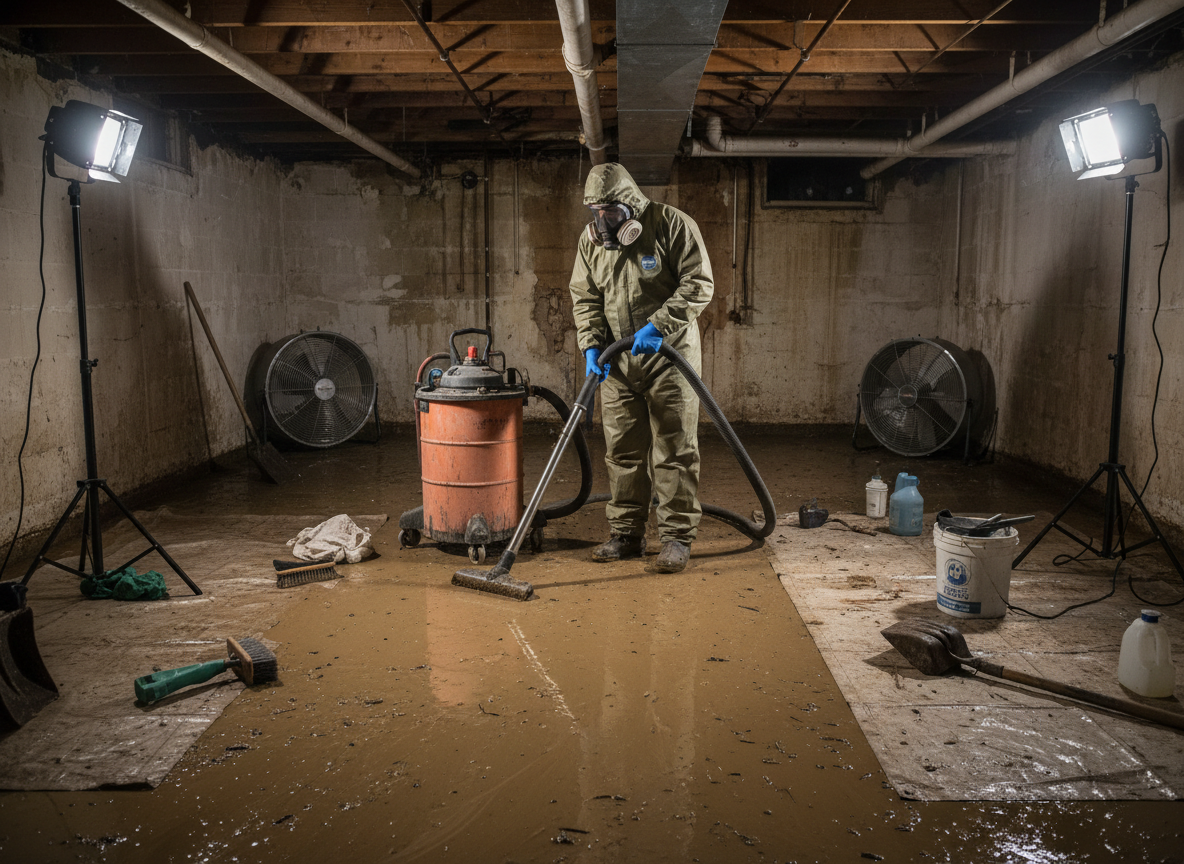
Columbus homes built before 1950 in Victorian Village, Bexley and Olde Towne East often have clay or cast-iron sewer lines that crack or separate under shifting Franklin County soil. When these lines back up, sewage can saturate subfloors and travel behind plaster or drywall, requiring full removal rather than surface cleaning. Technicians must map moisture with meters because hidden pockets in lath-and-plaster walls can reappear weeks later if missed.
Winter freezes followed by sudden thaws and summer thunderstorms both increase pressure on the county system. In Clintonville and Grandview Heights, combined sewers overflow during heavy rain, pushing effluent into basements that sit below street grade. Crews stage containment barriers first to keep contamination from reaching HVAC returns or shared walls in duplexes common in these neighborhoods.
After extraction, affected drywall and insulation must be cut out at least twelve inches past the visible water line. In Franklinton and Hilltop properties with slab-on-grade construction, crews also pull base trim and check under cabinets because sewage migrates along the slab edge. All porous materials are bagged on site and removed the same day to limit odor and bacterial growth.
Final disinfection uses EPA-registered products applied to concrete and joists, followed by dehumidification to bring moisture content below 15 percent before any new drywall is installed. Homeowners receive a written moisture map showing every area treated so they can verify the work before walls are closed.
Technician insight
In Columbus the thing that catches most people out with Sewage Cleanup is the clay sewer lines under streets in Victorian Village and Bexley; once one segment fails, effluent often travels under the slab and soaks drywall from the bottom up, which is why we always pull baseboards even when water looks contained to the floor.
Clintonville Main Line Backup
A 1920s home in Clintonville experienced a main line backup after a summer storm, sending sewage into the basement and up one wall. We found effluent had wicked behind the drywall along the shared wall with the neighbor. Extraction, removal of two sheets of drywall, and targeted drying stopped the spread before it reached the first floor.
Sewage Cleanup Services We Offer
✓Basement Sewage Extraction
Removes standing effluent from basements in older Short North and German Village homes, preventing migration into drywall and subfloors.
✓Main Line Backup Restoration
Clears and sanitizes after city main backups that affect multiple fixtures in Bexley and Victorian Village properties with aging clay lines.
✓Toilet Overflow Cleanup
Contains and removes sewage from upper-floor overflows that soak through ceilings and walls in multi-story homes common in Grandview Heights.
✓Sewage-Contaminated Drywall Removal
Cuts out and disposes of saturated drywall and insulation while protecting unaffected areas during cleanup in Clintonville and Linden homes.
✓Slab Edge Sewage Treatment
Treats effluent that travels under cabinets and along slab edges in Franklinton and Hilltop properties after heavy rain events.
Sewage Cleanup Cost in Columbus, OH
| Service | Typical Range | What Affects It |
|---|---|---|
| Initial Assessment and Moisture Mapping | $150–$300 | Higher when multiple floors or hidden wall cavities are involved |
| Basement Sewage Extraction | $600–$1,800 | Depends on depth of water and amount of solids present |
| Drywall and Insulation Removal | $400–$1,200 | Per room; increases with plaster walls or finished basements |
| Full Disinfection and Drying | $500–$1,500 | Based on square footage and length of drying time needed |
Ranges are typical for Columbus, OH and confirmed with an exact written quote before any work starts.
How it works
- 1
Site Assessment
Technicians inspect all affected rooms, test moisture in walls and floors, and identify the source of the backup before any work begins.
- 2
Containment and Extraction
Plastic barriers isolate the space, then pumps and wet vacuums remove standing water and solids while protecting HVAC systems.
- 3
Material Removal
Saturated drywall, insulation, and carpet pad are cut out and bagged for off-site disposal following local waste rules.
- 4
Disinfection and Drying
EPA-registered cleaners are applied, followed by air movers and dehumidifiers until moisture readings reach safe levels.
- 5
Final Verification
A second moisture map is provided and the space is cleared for drywall repair or other restoration work.
Pricing
Pricing varies by volume of water, number of affected rooms, and whether drywall removal is required. Quotes are provided after an on-site inspection.