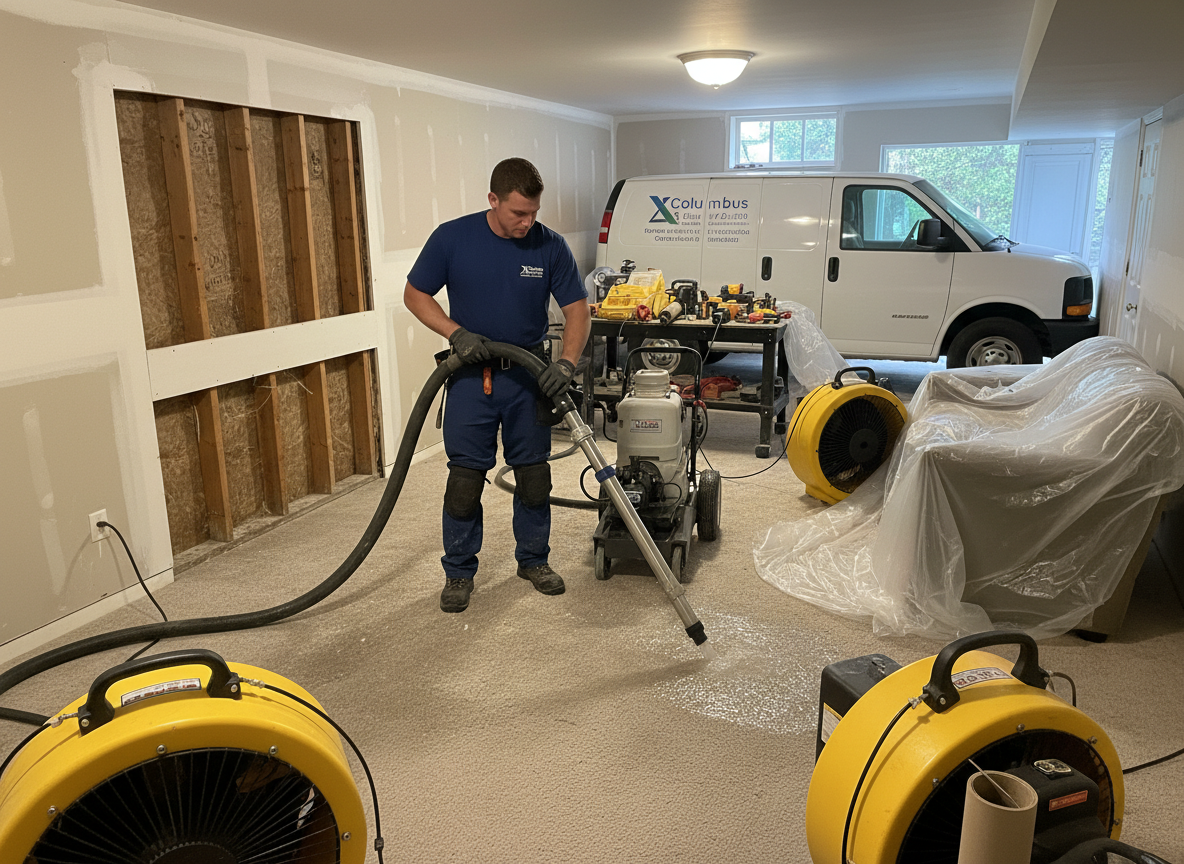
Columbus experiences a humid continental climate where winter freezes often burst pipes in pre-war homes found in German Village, Victorian Village and Olde Towne East. These brick and plaster structures trap moisture behind walls and under hardwood floors, requiring moisture meters and infrared cameras to locate hidden saturation before mold sets in. Technicians must work around narrow alleys and shared walls common in these blocks while protecting original trim and flooring.
Summer storms and basement seepage affect lower-lying areas like Franklinton and parts of the Hilltop where older foundations meet clay-heavy soil that drains slowly. Water can travel under slabs and reappear days later in adjacent rooms, so crews set up containment and run commercial air movers for extended periods. Nearby neighborhoods such as Clintonville and Grandview Heights see similar issues in split-level homes built on slight slopes that direct runoff toward finished basements.
Drywall repair after water events must match the thicker plaster-and-lath systems prevalent in Bexley and Short North rather than standard modern sheets. Replacement sections often need feathering into existing surfaces and careful sanding to preserve historic details required by local review boards. Technicians also coordinate with owners on timing to avoid disrupting access to nearby landmarks and event venues that increase foot traffic in these districts.
Equipment placement in tight row-house layouts demands smaller, quieter units and careful monitoring of humidity levels to prevent secondary damage to neighboring units. Crews track drying daily because Franklin County’s variable spring and fall temperatures can slow evaporation and extend project timelines compared with drier regions near Dayton or Cincinnati.
Technician insight
In Columbus the thing that catches most people out with water damage restoration is how plaster walls in German Village and Victorian Village homes hold moisture for weeks after the visible water is gone, so skipping infrared scans almost always leads to hidden mold later.
Frozen Pipe In Bexley Basement
A homeowner in Bexley discovered water seeping from a burst pipe during a January freeze. Crews found moisture had traveled under the subfloor into an adjacent room. Extraction, targeted drying and new drywall sections restored the space without affecting the original oak floors.
Water Damage Restoration Services We Offer
✓Emergency Water Extraction
Rapid removal of standing water from basements and first floors using truck-mounted pumps suited to Columbus row-house access.
✓Drywall Repair After Water Damage
Cut out saturated sections and install new drywall or plaster patches that match older construction found in German Village and Bexley.
✓Structural Drying and Dehumidification
Deploy commercial air movers and dehumidifiers to pull moisture from joists, subfloors and plaster walls common in Victorian Village homes.
✓Mold Prevention After Leaks
Apply antimicrobial treatments and run containment barriers to stop growth in damp crawl spaces under Clintonville and Grandview Heights properties.
✓Basement Flood Cleanup
Clear silt and water from lower levels in Franklinton and Hilltop homes where clay soil slows natural drainage after heavy rain.
✓Hardwood Floor Restoration
Lift and dry or replace water-damaged flooring while preserving original grain patterns typical in Short North and Olde Towne East residences.
Water Damage Restoration Cost in Columbus, OH
| Service | Typical Range | What Affects It |
|---|---|---|
| Initial Assessment And Moisture Mapping | $125–$275 | Higher when multiple levels or plaster walls require extra time |
| Emergency Water Extraction | $450–$950 | Depends on volume and whether basement or crawl space access is limited |
| Full Structural Drying Package | $800–$1,800 | Varies with number of days equipment must run in humid summer conditions |
| Drywall Removal And Replacement | $6–$12 per sq ft | Includes matching thicker plaster transitions in pre-1950 homes |
Ranges are typical for Columbus, OH and confirmed with an exact written quote before any work starts.
How it works
- 1
On-Site Assessment
Inspect affected rooms with moisture meters and document water migration paths through older Columbus construction.
- 2
Water Removal
Extract standing water and pump out basements using equipment sized for narrow alleys and shared foundations.
- 3
Drying And Monitoring
Set up drying equipment and check daily moisture readings until levels return to normal for the home’s age and materials.
- 4
Repairs And Drywall Work
Replace damaged drywall or plaster and restore finishes to match surrounding surfaces in Franklin County neighborhoods.
Pricing
Upfront quotes after inspection account for home age, water volume and access in older Columbus blocks.