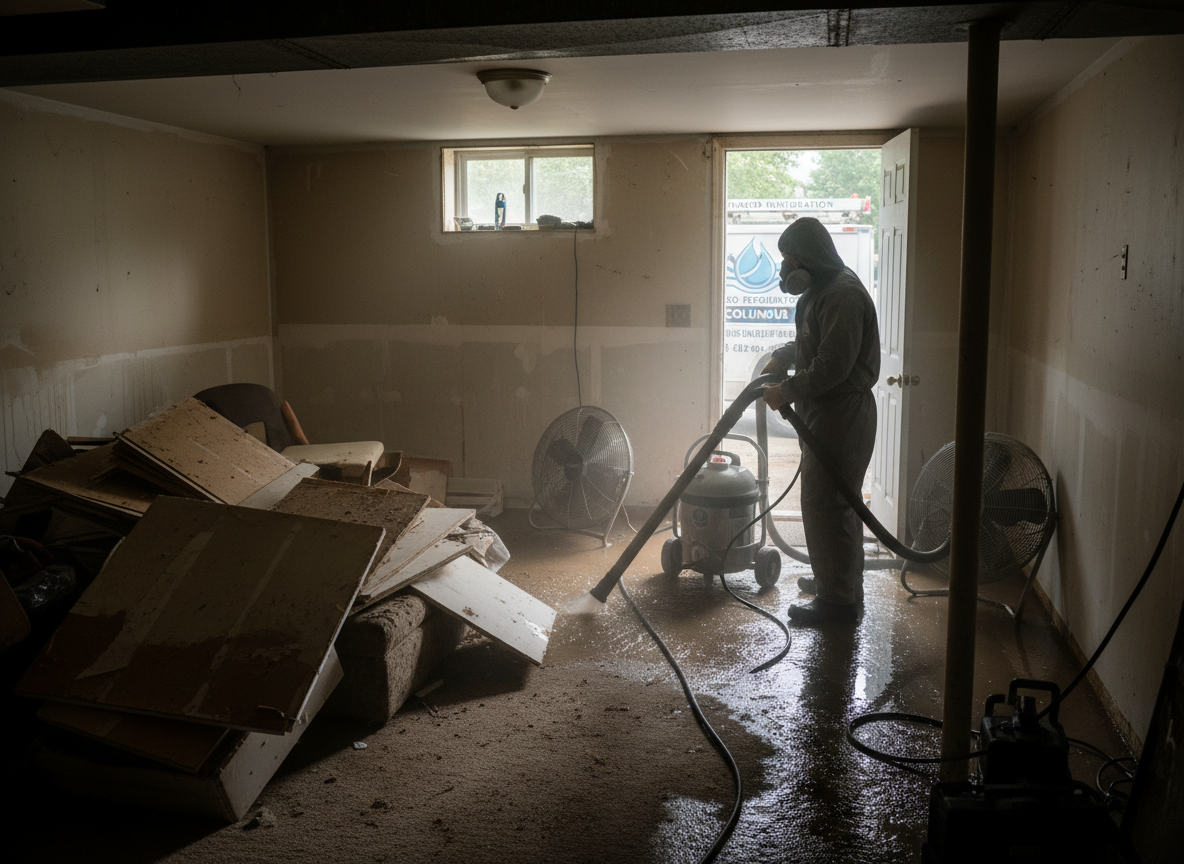
Columbus sits in a humid continental climate where cold winters freeze older cast-iron and galvanized lines in Victorian Village and German Village homes, then warm spring rains push water through cracked foundations and clay soils common in Franklin County. Technicians see repeated failures where downspout extensions empty against brick basements or where sump pumps lose power during outages that hit Hilltop and Linden hardest. Proper extraction must account for these hidden paths or moisture returns weeks later behind plaster and lathe.
Flood events tied to the Scioto River corridor or sudden summer storms often affect Franklinton and Olde Towne East first because of low-lying terrain and combined sewer systems. Crews must separate clean rainwater from sewage backups that travel through shared lines serving multiple streets. Contaminated material removal follows EPA guidelines for porous items, and drying equipment is staged to avoid pushing spores into finished spaces above grade.
Many Columbus properties predate modern waterproofing codes, especially in Clintonville and Grandview Heights where additions sit on original rubble foundations. After flood work, crews check for hidden voids under hardwood floors and behind drywall that can hold water for months. Replacement materials must match existing plaster thickness and wood lath spacing so repairs do not telegraph through new paint.
Technician insight
In Columbus, the thing that catches most people out with Flood Damage Restoration is how the freeze-thaw cycles in our winters open new cracks in the limestone and brick foundations that line streets in German Village and Bexley, letting groundwater return long after the initial storm water is gone.
Clintonville Basement After Summer Storm
Heavy rain overwhelmed the combined sewer line serving a 1920s Clintonville home. Water entered through a cracked foundation joint and rose eight inches in the finished basement. Extraction and drying equipment ran for five days; saturated drywall and carpet pad were removed before mold could establish. The homeowner returned to a dry, odor-free space ready for new flooring.
Flood Damage Restoration Services We Offer
✓Basement Flood Extraction
Removes standing water from Columbus basements using truck-mounted pumps sized for older stone foundations common in German Village and Bexley.
✓Sewage Backup Cleanup
Handles contaminated water from combined sewers that serve Franklinton and Short North after heavy rain events.
✓Structural Drying After Flooding
Deploys air movers and dehumidifiers calibrated for brick and plaster homes throughout Victorian Village and Clintonville.
✓Flood-Damaged Drywall Replacement
Cuts and replaces saturated drywall while preserving original trim details found in historic Grandview Heights and Olde Towne East properties.
✓Mold Prevention Following Flood Events
Applies antimicrobial treatments and improves ventilation in moisture-prone crawl spaces typical of Hilltop and Linden homes.
✓Emergency Water Extraction in Historic Homes
Protects original wood floors and plaster in neighborhoods near the Ohio Statehouse and Nationwide Arena where rapid response limits secondary damage.
Flood Damage Restoration Cost in Columbus, OH
| Service | Typical Range | What Affects It |
|---|---|---|
| Initial Assessment | Free | On-site evaluation for any Columbus address |
| Basement Water Extraction | $800–$2,400 | Varies by depth and whether sewage is present |
| Full Structural Drying | $1,200–$3,500 | Depends on square footage and hidden moisture |
| Drywall Removal And Replacement | $2.50–$4.50 per sq ft | Includes disposal and basic texture match |
Ranges are typical for Columbus, OH and confirmed with an exact written quote before any work starts.
How it works
- 1
On-Site Assessment
Technicians inspect affected levels, test moisture in walls and floors, and note any sewage indicators while documenting conditions in the specific Columbus neighborhood.
- 2
Water Removal
Pumps and extractors clear standing water, focusing on low points created by the original grading around older Franklin County foundations.
- 3
Drying And Monitoring
Equipment runs until moisture readings drop below 12 percent, with daily checks to catch hidden pockets behind lathe in pre-1950 homes.
- 4
Material Removal And Replacement
Saturated drywall, insulation, and flooring are removed; new materials are installed to match existing construction details.
- 5
Final Verification
Moisture meters confirm dryness and a written report is provided before any cosmetic finishes are applied.
Pricing
Upfront quotes follow inspection; costs rise with sewage contamination or multi-level access in older homes.